Why is Dubai the right place for your Tech company!

We live in an age of information and technology, with the number of IT companies in developed and developing countries increasing by the day. And if you’re an entrepreneur with a business idea who wants to start a company, look no further. Dubai often referred to as the “city of the future,” as well as a well-known centre for industry research and development, should be at the top of your list.

Dubai offers exciting opportunities and a favourable business climate. Dubai’s pro-business attitude and support for businesses of all sizes have resulted in a robust, vibrant economy. Not only does the city have a thriving community of start-up accelerators and regulatory sandbox schemes for the development and testing of new tech business models, but it is also ranked first in global foreign direct investment and major sections in emerging technological sectors.

As the Middle East’s technologically-based start-up scene grows, the UAE’s commitment to becoming a global leader in technological advancements has made Dubai home to some of the region’s hottest enterprises. 29 of the 100 start-ups shaping the Fourth Industrial Revolution are based in the UAE, with nearly half of them based in Dubai! Not to mention that foreign nationals benefit from 100 percent ownership, tax breaks, and customs duty exemptions, to name a few important factors when compared to other countries.

To elaborate on why Dubai is an appealing start-up hub for entrepreneurs from all over the world,

– It is simpler to start a business.

– Relaxed Foreign Ownership and Visa Requirements

– Technology and Capital Investment

– A Constantly Expanding Economy

– Pioneer in adopting cutting-edge trends and technologies

Furthermore, Dubai is a forerunner in adopting the latest trends and technologies while developing an enabling ecosystem that enables businesses across sectors to innovate with long-term strategies in AI (Artificial Intelligence), Blockchain, Metaverse, and IoT. (Internet of Things). The government is working hard to make Dubai a smart, intelligent, responsive, and personalized city of the future!

A summary of some of the most recent technologies adopted by the UAE.

Blockchain

Blockchain is a method of storing data that makes it difficult or impossible to change, hack, or manipulate. It is a digital log of transactions that is duplicated and distributed across the entire network of computer systems that comprise the blockchain. Each block on the chain contains several transactions, and whenever a new transaction occurs on the blockchain, a record of that transaction is added to each participant’s ledger. DLT (Distributed Ledger Technology) is a decentralized database that is managed by multiple people.

Why so much hype around the blockchain?

There have been numerous attempts to create digital money in the past, none of which have been successful. The main issue is one of trust; if someone creates a new currency, how can they be trusted knowing full well that they can give themselves some amount and/or steal someone else’s money for themselves? This problem was solved by employing a type of database known as ‘Blockchain.’

Most normal databases, such as SQL Database, have someone in charge who can change the entries; however, Blockchain is unique in that no one is in charge; it is run by the people who use it!

According to H.H. Sheikh Mohammed bin Rashid Al Maktoum, “Dubai will be the first city fully powered by Blockchain under the Dubai Blockchain Strategy, which is the result of a collaboration between the Digital Dubai Office and the Dubai Future Foundation to constantly explore and evaluate the latest technological innovations that demonstrate an opportunity to deliver more seamless, safe, efficient, and impactful city experiences.”

AI (Artificial intelligence)

A branch of computer science is concerned with developing intelligent machines that can perform tasks that would normally require human intelligence. Simply put, artificial intelligence is the simulation of human intelligence processes by machines, particularly computer systems. As the hype surrounding, AI has grown, vendors have been scrambling to demonstrate how their products and services integrate AI. AI necessitates a foundation of specialized hardware and software for designing and training machine learning algorithms. Although no single computer language is synonymous with artificial intelligence (AI), a few stand out, including Python, R, and Java.

According to the UAE National Strategy for Artificial Intelligence 2031, there are plans to transform the UAE into a world leader in A.I. by investing in key people and industries! “We want the UAE to become the world’s most prepared country for Artificial Intelligence,” His Highness Sheikh Mohammed bin Rashid Al Maktoum said.

The UAE aims to be one of the world’s leading AI nations by 2031, creating new economic, educational, and social opportunities for citizens, governments, and businesses, and generating up to AED 335 billion in additional growth.

Metaverse

An internet iteration as a Single, Universal, and Immersive Virtual World made possible by the use of Virtual and Augmented Reality headsets! The metaverse is a three-dimensional, hyper-realistic virtual-reality arena in which users interact with one another in computer-generated environments such as stores, learning environments, and conference rooms, among other things. Social media, augmented reality, virtual reality, video games, and other cutting-edge technology are all incorporated.

Its development is linked to the advancement of virtual reality due to ever-increasing demands, having originated in the 1992 science fiction novel Snow Crash. Some of this technology’s components have already been developed and used in online video games. Popular names include World of Warcraft, Minecraft, and Fortnite, all of which have already incorporated the metaverse. Recently, in 2021, the technology behemoth Facebook renamed itself ‘Meta’ and announced its commitment to developing a metaverse!

Since 2017, following the acquisition of the VR company AltSpcaceVR, Microsoft has implemented metaverse features such as virtual avatars and virtual meetings in Microsoft Teams.

The metaverse can be accessed via general-purpose computers and smartphones, as well as augmented reality, mixed reality, and virtual reality. Current hardware development is centred on overcoming the limitations of VR headsets and sensors, as well as increasing immersion through haptic technology. Interoperability is a major concern in metaverse development, stemming from transparency and privacy concerns.

Microsoft recently adapted this for HoloLens 2 in 2019. (a pair of mixed reality glasses developed and manufactured by Microsoft)

According to a May 20th article, the Dubai Metaverse Strategy, announced earlier this month by Dubai Ruler Sheikh Mohammed bin Rashid Al Maktoum, aims to increase the metaverse sector’s contribution to the emirate’s economy to $4 billion by 2030. It also intends to increase the metaverse’s contribution to one percent of the emirate’s GDP.

IoT (Internet of Things)

The best way to define IoT is as an interconnected network of computing devices, mechanical and digital machines, items, and people with Unique Identifiers (UIDs) and the ability to transfer data without the need for any human-to-human or human-to-computer interaction.

IoT is defined as any natural or man-made object that can be assigned an IP address and transmit data over a network, such as a person with a heart monitor implant, an animal with a biochip transponder (wireless communication, monitoring, and control device that detects and responds to incoming signals), an automobile with built-in sensors alerting the driver about low tyre pressure, or any natural or man-made object that can be assigned an IP address and transmit data over a network.

Organizations across a wide range of industries are increasingly turning to IoT software development to improve operational efficiency, better understand customers in order to provide better customer service, make better decisions, and increase the value of their businesses.

The Smart Dubai Internet of Things Strategy is a comprehensive plan to secure and promote Dubai’s digital wealth while also providing efficiency and peace of mind to all city residents, visitors, business owners, and government officials through a citywide partner network. The plan began with the announcement of two major initiatives led by Smart Dubai to promote secure information sharing and exchange via the Internet of Things.

The Importance of User Experience in Web app/Mobile App Development

When developing an application or a website, it is critical to ensure that the users have a positive user experience. It is critical to take the time to create an application that has a very accessible and simple flow of features within it.

Today’s topic is the importance of user experience and its relevance and weight in an application’s overall success.

What are UI and UX?

There are many complexities behind UI and UX, but let us try to explain them in a simple and straightforward manner. The process of designing a proper structure for a website or application is known as user interface design (UI).

UX, or user experience, on the other hand, refers to everything related to the user’s experience while using that structure. The experience is not the app or the website itself, but rather how people can navigate through them.

Why are they so important?

When users download an app, they are more likely to keep it if they can use it effectively and efficiently without any external assistance. When an application interface’s learning curve is too steep, it can be attributed to poor UX, which leads to users deleting the application and/or finding an alternative application that provides a better user experience.

As a result, it is critical that the user interface be optimized for the intended audience. A good UX requires a great user interface. The UX is likely to fail without a good UI. The success of the user interface layout has an impact on the user experience in every way.

Reasons why they are required

If you want to be able to provide an exceptional user experience, you should consider the tips that ensure both UI and UX are properly implemented. The following reasons demonstrate why this is so critical.

Understand your audience’s needs

Understanding your audience’s needs is always essential when developing a successful mobile application. To accomplish this, you must conduct specific market research and comprehend the buyer persona. You will be able to see results once you have identified the most relevant aspects of your service that connect with your target audience.

Enhance Customer Satisfaction

Customer satisfaction is critical in ensuring the long-term viability of your application. This is critical to remember because it will convert new users into long-term app users.

The application’s UI and UX are critical to ensuring the highest level of customer satisfaction.

It keeps users engaged

As previously stated, the goal of a great user experience is to keep new users engaged. This is only possible if you can design a structure that provides users with a simple and dependable interface.

Engagement is critical because you want to ensure that app users stick around for the long haul. The longer they stay, the more likely they are to recommend your app to others.

Increase brand awareness

When you deploy an app that provides a positive user experience, you are also strengthening your company’s brand. Anything that positively relates to your company will be ideal for brand awareness.

At the end of the day, the most important thing for any business to do is to increase the credibility of its brand. This will ensure that the current app, as well as any future solutions, are relevant to those users.

More sales

The better the user experience, the faster it translates to sales. Always keep this in mind when deciding on a mobile app development partner. The better your partner is at delivering an exceptional application experience, the easier it is to grow your business.

Sales are the ultimate goal of all businesses. As a result, it is strongly advised that you find the right development partner in order to have an impeccable UI & UX for your application.

Last thoughts

The way a target audience interacts with an app will always be important. Nothing is more important in ensuring that the application remains relevant to the user than the ease of use of that specific solution.

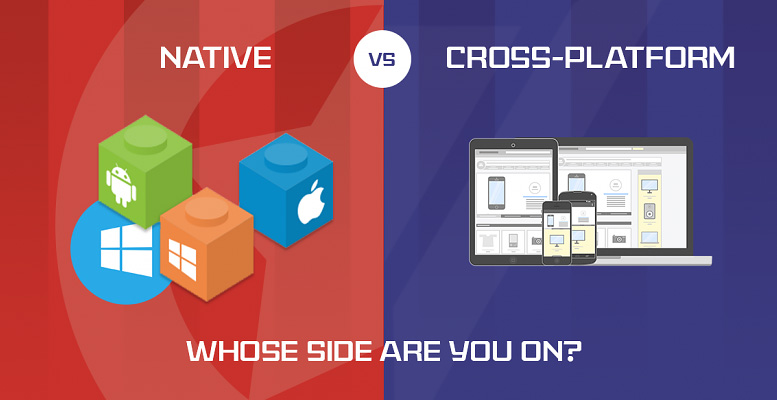
Should you go for Native or Cross-Platform Apps?

It is undeniable that mobile applications have become an integral part of our daily lives in the modern era. People are now using mobile apps for a variety of reasons, including accessing news and other information, shopping, gaming, and engaging on social media, thanks to the ever-increasing popularity of smartphone usage and mobile applications.

As a result, mobile app development companies are attempting to experiment in order to discover the best way to build a mobile app that not only looks great but also functions smoothly on various smartphones/devices.

Why is there a debate over Native vs Cross-Platform Apps?

With the ever-increasing competition between the Google Play Store and The Apple App Store, two of the world’s largest mobile application stores with a vast library of apps, determining which platform would best suit your app has become difficult.

If you want to create an app that only works on one of those two stores, you’ll need to create a completely new version for the other store. A cross-platform solution, on the other hand, aims to provide functionality in both of those stores with a single version of the app.

To put this into perspective 

  • The Google Play Store has over 2.8 million apps, while the Apple App Store has over 1.9 million.
  • The average smartphone user has 5-10 applications that they actively use.
  • Google and Apple combined for over 218 billion app downloads last year!

These figures demonstrate the importance of applications in modern times. This is the primary reason why it is critical to understand what type of app you want to create.

Let us examine the benefits and drawbacks of the two types of mobile apps – Native and Cross-Platform – and compare them based on their specific function and requirements.

Native Apps

Native app development is done with a specific platform in mind. This frequently results in a more solid outcome in terms of results and timelines. You could argue that this is the ideal solution, but it is not within everyone’s financial means.

Advantages

  • A native app is a much faster and more responsive option.
  • Push notifications that offer a more engaging experience
  • A very broad range of functionalities
  • More likely to rank higher in-store searches
  • Scalability is generally quite high.

Disadvantages

  • The cost of native apps is higher due to the need to develop more than one version of the app to be offered on more than one platform (iOS & Android).
  • The process is time-consuming because each platform must be started from scratch, and equal work in terms of development, testing, and project management must be assigned to each platform.

Cross-Platform Apps

Consider a cross-platform app as a more accessible option. This is ideal for those who do not want to invest heavily in development. Although this one-project-fits-all solution is very practical, it does have some drawbacks.

Advantages

  • Because it is the same code that works on multiple platforms, it is significantly less expensive than native app development.
  • The development process is faster, which translates to lower costs due to shorter development timeframes.

Disadvantages

  • These apps are typically slower due to a lack of platform-specific optimization.
  • Cross-platform apps have a more difficult time gaining access to various smartphone functionalities.
  • When developing cross-platform apps, you do not have access to native UX components.

The major differences between Native and Cross-Platform Apps

  • Native applications take much longer to develop, but the end results are much superior.
  • Cross-platform programming saves time, but it comes at the expense of reliability, speed, and hardware accessibility.
  • When designing a cross-platform solution, the user experience suffers since you must consider various platforms while developing it.

The success of your mobile app is not solely dependent on which of the two platforms (native/cross-platform) you choose. Airbnb (cross-platform), Bloomberg App (cross-platform), Uber (cross-platform), WhatsApp (Native), Facebook (Native), and Spotify (Native) are just a few examples of companies that choose one of the two.

It’s vital to remember that, unlike cross-platform apps, a native app can be used on several platforms. However, the app creation process for each platform is separate.

Cross-platform apps use a single development process to ensure compatibility across multiple platforms.

Final thoughts

At the end of the day, deciding whether to go native or cross-platform involves a lot of thought. The best mobile app development services can make a significant impact in this process.

When looking for a reputable mobile app development business, keep this in mind. The outcomes you obtain regardless of your decision about the development team’s experience. achieve platform compatibility across several platforms

Consider These Factors When Creating Your Company’s Website or Mobile Apps

From functionality and appearance to navigation and coding integrity, there is a lot that goes into creating an appealing, user-friendly website. It also does not stop there. Web developers and designers must work together to create websites that are found by search engines, attract customers, and encourage conversions. The race to create the next popular app is fierce, and companies that haven’t invested in one feel as if they’re missing out on a piece of the digital revolution. The suggestions below will guide you through the process of creating a one-of-a-kind user experience.

Tips to Remember When Creating a Website

When you begin the process of designing a website, you will need a checklist of necessary features. The following is a list of the most important things you should include on your website.

Domain Name

Finding the right name for your company is critical because a domain name that incorporates SEO, easy spelling, and brand identification is more likely to be found in search engine results. Excellent domain names (for example, Sellanycar.com and Propertyfinder. ae) convey a lot of information while saying very little!

UI/UX

The User Interface and User Experience are primarily determined by two factors: the website’s functional elements and an appealing design. You will not be able to wow your users unless you have a strong back-end, and without a clean design, your users will have difficulty navigating your website.

Features and Functionalities

The features of the website should be defined in accordance with the audience that you are attempting to reach. The features on your website should be viewed through the eyes of a user. It is necessary to identify the required functionalities based on the needs of the audience, geo-location, and business industry, as the absence of any functionality will prompt the user to leave the website and seek alternatives.

Optimized Loading Time

The speed with which your website loads is more important than you might think. Visitors typically leave a website if the loading time exceeds five seconds. Customers get the information they want, when they want it, thanks to fast loading times. Evaluate your website’s loading time on a regular basis to increase customer retention and provide a positive user experience.

Blogs

Customers rely on on-site blogs to stay up to date on the latest products, corporate events, and industry news. The consistency of your blog posts has a significant impact on the number of visitors who land on your website.

Search Engine Optimization (SEO) Friendliness

While content from blogs or articles is important for SEO, so is overall website content. This means that all sections of the website must contain SEO-driven content that targets relevant keywords.

Mobile responsiveness

Today, a large number of users browse websites from their mobile devices, making responsive design mandatory. Having a website that is not mobile responsive may be detrimental to your business.

Testimonials

Your prospective customers will want to know how satisfied they were with your services in the past. It is critical to include customer testimonials in order to build trust with your buyers.

Conversion Points and Strategy within your Website

You should make sure that your websites include pages dedicated to converting visitors into potential clients. This is commonly accomplished by developing a landing page that directs visitors to a sales page or by incorporating a WhatsApp/Live chat function into your website. The process of funnelling visitors and converting prospects into consumers requires some thought and must be carefully strategized based on your company’s goals.

Tips to Remember When Developing Mobile Apps

When deciding to develop a mobile app for your company, there are various factors to consider. Before you begin, make a list of some of the most important things to consider.

Native or Cross-Platform

The sort of platform required will be determined by the functionality and features to be included in the platform. Cross-platform apps have a lower budget and schedule than native apps, but you may be constrained in terms of capabilities in a cross-platform app compared to a native app.

Check your competitors

Understanding who your competitors are and what they are currently offering in terms of solutions on the market is critical. This will enable you to make the greatest selection in terms of mobile app features, allowing you to stand out in terms of USPs in the market (Unique Selling Points).

UI/UX

You must ensure that the User Experience and User Interface of your mobile app are optimized, just as you must when creating a website. If an app’s UI and UX are well-designed, users are more likely to use it and promote it to others, ensuring a positive customer experience.

Features and Functionalities

To get your app idea off the ground, you may need a lot of features and functionalities. The must-have features and functionality for your mobile app are determined by your specialization, the app’s purpose, the consumer segment you’re targeting, and a variety of other factors.

Monetizing Model

You must determine if your app will be charged or free to your users. You should also figure out if in-app purchases will be available. This is critical because, depending on your niche, each of those models will have advantages and downsides. You might use a demographic result to assist you to decide on these lines.

Registration in the Apple and Google shops takes a long time

It takes a long time to register your app on the Apple or Google stores. To avoid a bottleneck immediately before your planned launch date, you should prepare to create your apple and play store accounts far ahead of time.

Software Development Vendor/Partner Delivery Schedules

Due to a variety of reasons, the time it takes for the development team to produce your app will be critical. Costs, quality, time to market, and unique business plans will all be important considerations.

Final Thoughts

You want a service that is both economical and efficient when building a website or a mobile app. This is why it’s crucial to get a developer and designer who has a lot of expertise and understands the value of affordable prices and meeting the project’s deadline.

Take your time and make sure that the project is going on the appropriate path. Making solid judgments about the people you hire will be the most significant part of this procedure in the end.

While our goal is to provide information about beginning a business and the complexities associated with developing a suitable website and/or mobile app, please read our other blogs to learn more about the other aspects of this process.

The Benefits of Selecting the Right Software Development Company

After thoroughly discussing the concept of becoming the next big tech unicorn, analyzing the industry, validating ideas, transforming digitally, documentation and its importance, and the difference between hiring your own resources or opting for an offshore company, let us now turn our attention to the process of selecting the right software development company for your business. While it may not be as simple, it is critical that you take your time and make this decision!

Why is it critical to select the right software solutions company?

Beginning a new software project for your company can be both exciting and intimidating. Choosing a software company is a difficult process. It’s easy to become overwhelmed by the number of software development partners available, and it’s difficult to know who to put your trust in to get the job done.

It is critical to find the right software partner for your needs, someone with a proven track record, appropriate technological expertise, and a belief in solid partnerships. 

Advantages of Choosing the Best Software Company

We cannot emphasize enough how important it is to choose a software development company that has the skills, expertise, and experience to understand your idea, differentiate the good and bad aspects, suggest improvements, and commit to a completion time frame.

These companies typically work as an extension of your own, understanding your business needs, utilizing cutting-edge technology to increase profitability, combining technical excellence with excellent customer service and value for money, creatively collaborating to achieve a common goal, and ensuring the delivery of high-quality solutions.

A good software solutions provider will always check the boxes below. –

Customer Centricity

When you hire an experienced mobile app development company, you will find that they will devote time to your project. To achieve the best results, a company should be able to focus solely on your project.

The most important benefit of customer-centricity is that it will result in a more productive process. This will allow you to significantly reduce your expenses. Don’t forget this, and you’ll be able to get the best results when developing a mobile app for your company.

Understanding the scope and objective

Often, software projects fail due to a lack of clarity in the original scope, which makes communicating project requirements difficult. Ideally, a software partner will assist you in developing your project scope and scheduling follow-up meetings to address any questions from their team about your project. The best software partners will ask you several questions about your project idea in order to provide you with the best technical solution that will help you stand out in the market.

Cost Reduction

The cost of your project varies according to its scope, timeline, and requirements. The truth is that working with software developers can help your business save money and time in a variety of ways. For companies that do not want to work with a software development firm, there are numerous costs associated with the development process.

However, partnering with a software company proves to be a more cost-effective solution and ultimately more rewarding for your company due to the expertise, experience, skillsets, dedicated full-time specialists, and reasonable hourly development costs.

Technical Expertise

Finding skilled employees capable of meeting your needs and expectations is one of the most difficult challenges a company faces. Software development necessitates a wide range of constantly evolving complex skills, an innovative mindset, and out-of-the-box thinking. Not only that, but you’ll also need experts in solution-finding to help you capitalize on market opportunities.

You can ensure that your software development projects are developed using the most efficient workflows and cutting-edge software tools by partnering with an experienced software company. This assists your company in discovering novel ways in which new technologies can aid in the achievement of business objectives.

Timeline

We are all hoping for a smooth development process and quick project implementation. Unfortunately, a lack of talent and specialized skills, as well as other constraints, puts the project at risk in a variety of ways. This is where assembling a team of technical experts comes in handy, as they can help you avoid common issues that can cause a project to take longer to complete and, ultimately, cost more money!

A specialized software solutions company is always committed to your project because they provide you with a well-prepared and flexible team that is ready to adapt to changing business needs.

Marketing Reach

Great mobile app development companies will also provide you with the best promotional services for your mobile app. This is critical for the success of your business idea, and it can be challenging to handle on your own. It is critical to remember that a great application is only as good as its marketing.

A team with extensive experience will also assist you in investing in the most dependable marketing strategies. This is a critical step in the process because it allows you to improve your results. Marketing an app is just as important as developing it.

Eliminate Communication Gaps

One of the most significant advantages of working with an experienced software company is the ability to effectively communicate progress. They typically share weekly project updates, request necessary information, notify you of any glitches (if any), provide delivery and milestone checklists, and are available to answer any questions you may have about the project. They are basically open communicators!

A good software company will always try to eliminate gaps in communication about your project’s expectations, timelines, issues/bugs, and delivery, reducing the time to market for your product.

Skilled professionals

Choosing a software company is linked to the company’s skill set. Typically, an experienced software partner will have employees with the necessary talent/skill set to complete your software project smoothly.

This is very useful when you are starting your company/project because it relieves you of the burden of finding individuals with specific skills to complete your project. It not only assists you in ensuring that the developed website and/or mobile app is of the desired quality but also has a rich user experience.

Final Thoughts

At the end of the day, selecting a software firm can be difficult. As you can see from the preceding list, there is a lot to consider before making a final decision. You’ll need to prioritize the needs of your project in terms of everything from costs to communication.

Choosing the best software company is a big decision. After all, you’re not just selecting a software development partner.

You get to choose whether your company will impress customers from the moment your product is released – and beyond.

While our goal is to assist you in providing information relating to starting a company and the nuances associated with creating the relevant website and/or mobile apps, please read our other blogs to learn more about the other aspects of this process.

When developing a website or app, should you use your own resources or hire a software solution provider?

Now that we’ve covered the documentation and validation components of developing a website or mobile app, let’s look at how important it is to decide whether to use your own resources or hire a software solution provider/company to do so.

When considering the development of a website or mobile application, the first assumption is that you will use your own resources. This basically means that you’d have to look for developers among your current employees. This may appear to be the best option at first, but once the development process begins, problems emerge.

Many businesses believe that the process of hiring a mobile app development company is inefficient and that hiring an external company would be prohibitively expensive, not to mention time-consuming.

We’ve compiled a list of seven reasons why hiring a mobile app development company is the best option when creating a website or mobile app.

1. Decreased Product Development Time

A software development company is an excellent choice for saving time while developing a mobile app and/or a website. This is often due to their level of experience, and these factors combine to make them an excellent choice.

A dependable software development company completes work in an efficient and effective manner. It’s also important to remember that cutting development time means cutting costs significantly.

2. The availability of a wide range of skill sets under one roof

The availability of a wide range of skills within a software development company is critical because it ensures that every hour spent developing is productive. Working with a team that lacks certain skills can cause the development process to be slowed.

When working with any app development company, you must ensure that the team behind the process has the necessary skills. This is not always possible with an in-house development team, whose skill sets may be limited.

3. Ease of project management

Working with a mobile app development company is a smooth process because you can leave the project in the hands of skilled professionals while you focus on other aspects of your business’s expansion.

When a software development project is not properly managed, it can turn into a nightmare in terms of time, delivery, involvement, and costs. Hiring a software solutions provider eliminates this step because they have dedicated resources to handle all aspects of the development process.

4. It is inexpensive

With an in-house workforce, you will be responsible for a large portion of the overhead costs, which may have a long-term impact on your bottom line. In contrast, when you outsource, you only pay for the services you receive, which are usually less expensive and available on demand. When you outsource, you can hire the best people for your project without having to worry about overhead or the cost of setting up a workstation. Saving money is one of the primary reasons why many businesses outsource.

5. Increased Work Quality

Quality is important in the digital world, just as it is in any other industry project, and you cannot achieve optimal quality with inexperienced developers. When you hire a company for software services, you will notice that the work is of high quality. This is due to the company’s level of exposure and experience.

That being said, you do not want to hire the cheapest development services available. When it comes to quality and price, there is always a happy medium.

6. There are fewer risks involved

You can halt the project at any time by using an outside service. This means you won’t suffer any major financial setbacks.

This is an extremely important aspect of a project because your expenses may begin to exceed your budget. The ability to halt the project without having to continue paying the developers allows you to regroup and re-start when you are ready.

Making the right decision can save you from a lot of trouble. The fewer risks you take when developing your mobile application, the better the results.

7. Expect fewer annoyances

When you hire the services of a software company, you make fewer mistakes because of their experience and expertise, as opposed to developing the website and/or mobile app in-house with an inexperienced team.

Not to mention that the time spent on these tasks is significantly reduced. All that remains is for you to conduct regular check-ins to see how things are progressing and to communicate if you want any changes (based on the agreed-upon features and functionalities) or to request some changes if both parties agree.

finding the most dependable software company

When looking for a software development company, you must make an informed decision. It is not only about experience, but also about dependability, service quality, and efficiency.

This is why, before hiring your application development partner, you should consider the factors listed above, as well as strike a balance between affordability and quality. This will allow you to develop your website and/or mobile app more quickly and without bugs!

Conclusion

Hiring a reputable mobile app development company is, of course, a wise decision. There are several disadvantages to working with an in-house team, as highlighted in this blog. The good news is that finding a trustworthy and efficient firm is much easier than you might think.

What is Industry Analysis?

Starting a business that will be successful in the long run is a difficult task. It is critical to make the most of this process in order to achieve the best possible outcome.

According to statistics, roughly 20% of all new business ventures fail within the first 24 months. Only 25% of those who remain active life to the age of ten. The fundamental reason for this is that the project is not preceded by thorough industry analysis.

This implies that the majority of failed business ventures were doomed from the start. Most people do not conduct extensive research into the industry in which they wish to work. Clearly, this is a major blunder, and business owners must recognize the significance of industry analysis.

Opportunities in technology exist in a variety of industries.

Every day, we see how technology is transforming our world. From dating to grocery shopping, it’s difficult to imagine a facet of life that hasn’t been influenced by technology. That is to say, you would be equally well-served by investigating opportunities in modern healthcare, automobiles, retail, agriculture, or any other industry.

Here are some examples of technology opportunities in these industries:

Automotive: Vehicle connectivity with artificial intelligence and driving simulations in augmented reality.

Retail: Autonomous checkout systems in retail, augmented reality clothing stores, and artificial intelligence

Healthcare: Telemedicine that incorporates augmented and virtual reality features.

Agriculture: Farming software with GPS optimization and AI-powered moisture and temperature sensors.

How should an industry analysis be carried out?

Once you’ve made a decision, there are a number of steps involved in conducting an industry analysis. Begin by conducting a thorough background search on the industry or a subset of it, and then collect, analyze, and compare data to help answer market-related questions.

In addition, you should use the following commonly used and important methods to ensure a reliable outcome.

Competitive analysis

Within any industry, competition is always a factor. Analyzing the industry using one of the most famous models developed in 1980, also known as ‘Porter’s 5 forces,’ first introduced in Michael Porter’s book “Competitive Strategy: Techniques for Analyzing Industries and Competitors,” provides an acute impression of the industry and simplifies the analysis.

These five steps are as follows:

Industry rivalry intensity – The number of industry participants and their respective market shares are a direct reflection of the industry’s competitiveness. Lack of product differentiation tends to increase competition intensity. Exit costs that are prohibitively expensive, such as high fixed assets, government regulations, labour unions, and so on, make it more difficult for competitors to win.

Potential entrants – This shows how simple it is for new businesses to enter a specific industry’s market. Companies face a constant threat from new competitors if it is simple to enter an industry. When an entry is difficult, the firm with the smallest competitive advantage benefits for a longer period of time. When entering a difficult market, businesses must contend with a consistent set of competitors.

Supplier bargaining power – This refers to a supplier’s bargaining power. When an industry is reliant on a small number of suppliers, the suppliers wield considerable bargaining power. This is especially problematic for small businesses because it has a direct impact on the quality and pricing of the final product.

Buyer bargaining power – When customers have bargaining power, the outcome is the polar opposite. When consumers/buyers have bargaining power, they can negotiate lower prices, higher quality, or additional services and discounts. This is true in an industry with a larger number of competitors but a single buyer who accounts for a sizable portion of the industry’s revenue.

The threat of substitute goods/services – Because every industry’s products compete with similar substitute products from other industries, any firm within that industry will face competition from other industries, reducing profitability because it cannot charge exorbitant prices. It is possible to substitute two types of products: those of similar quality/function but lower cost, and those of the same price but higher quality.

PEST Analysis

The famous PEST analysis, also known as the ‘Broad Factors Analysis,’ stands for Political, Economic, Social, and Technological. To ensure that you have enough data, each of these aspects must be examined separately. This is an excellent framework for examining the industry.

Political: Understanding the political environment in your industry is critical for success. This entails learning everything you can about the legal policies and regulations that may affect your venture, such as taxes, labour laws, political stability, and so on.

Economic: Everything concerning economic growth, inflation, unemployment, interest rates, and so on. This will all have an impact on your business, and you must consider each factor.

Social: Factors relating to your company’s social impact. This includes cultural constraints, education level, customer demographics, behavioural trends, and overall lifestyle.

Technological: This is also important, as you must consider how technology will impact your business. The consequences could be both negative and positive, depending on the advancements and developments that change how a business operates and how people live their lives. The majority of the time, technology will be an advantage.

SWOT Analysis

SWOT analysis, like PEST, is a popular method of analysis. It is an acronym that stands for Strengths, Weaknesses, Opportunities, and Threats. This analysis is designed to ensure that all of your business decisions are calculated.

Strengths: Consider what strengths your company possesses and how those strengths are perceived by third parties, as well as what you do well and what distinguishes your company.

Weaknesses: It is critical to identify what your competitors are doing better and to match or exceed their performance. Recognize what your competitors are doing well in your current business strategy.

Opportunities: Identifying market opportunities, leveraging your strengths, and capitalizing on current trends are all critical components of your venture.

Threats: In addition to understanding how your competitors are affecting your business, you should examine the mistakes and threats that could have a negative impact over time.

The modern world is ruled by technology!

We live in a time when technology is the most relevant and powerful business tool available. It is critical that we learn to recognize this as the most important aspect of our modern-day strategies.

Software solutions that can be applied to any business problem are required for business solutions. A critical aspect of investing in useful technology is determining the best course of action to take in order to find the best solution to this problem. This could have a significant impact on a company’s competitive advantage.

Collaboration with a reputable software development firm

Choosing a reputable software development company is critical to getting your project off to a good start. It is critical to be able to obtain the appropriate advice to help you fine-tune your efforts.

Ensure that the development team you hire understands your industry. Furthermore, they should have prior experience working with start-ups to assist you in making the best decision. This type of project should ideally be handled by a team with relevant experience.

Finally, some thoughts on industry analysis.

When starting any type of business, there are numerous factors that must be considered. If you want your business to be successful in the long run, you should prioritize industry research.

How do you market mobile apps after they’ve been released?

app-development

You are probably aware that there is a lot that goes into the process of developing a mobile app. A project is often time consuming, stressful, and draining from the start. You are faced with a completely new challenge once you have a fully developed app from a mobile app development company.

A challenge for your mobile app is a lack of users, which is a problem that most web/mobile app companies face. As a result, it is critical to ensure and produce the best results.

In other words, mobile apps face the same problem that any other product does at first: a lack of promotional reach! Given the massive number of available options, the chances of being found on store listings are slim to none.

The Apple App Store has approximately 2 million apps and the Google Play Store has approximately 3 million apps. These figures show how important it is to effectively market your mobile apps in order to gain a user base.

Newly developed mobile apps are never searched by their names in either of these app stores (Apple Store/Google Play Store), which means that people will never find your app if you do not promote it across all available channels.

Let’s take a look at some of the best ways to promote your mobile app that will guarantee results.

Website development

Create a one-page website that describes the app and the features it provides. This is critical because this website will be used to generate the necessary traffic through content marketing.

The best way to accomplish this is to hire a web development company to assist you in developing an effective and professional website. The responsiveness, navigation, loading times, graphics used, and so on are all critical components in this process, and the web development company will take care of all of them for you.

The website you use to promote your mobile app must contain all of the information that your target audience requires. This is extremely beneficial, as it allows you to build a solid marketing strategy.

Search Engine Optimization (SEO)

Search engine optimization is the process of increasing the quality and quantity of website traffic from search engines to a website or web page, and when you hire the best SEO company in Dubai, for example, you must ensure that your content is given top priority. Search Engine Optimization (SEO) is always the best option for this purpose.

When your website begins to consistently produce quality content, you will be astounded at how easily you can find a relevant user base for your mobile app. However, keep in mind that SEO is important in the long run and is a more viable option than investing in paid advertisements on a regular basis.It is also critical to remember that the key to achieving great results is to consistently create high-quality content. You must be patient with this process because it allows you to grow much faster organically. There are numerous aspects of Search Engine Optimization that must be considered (SEO). You must also ensure that you find relevant keywords in order to achieve the best results. Keep in mind that a content marketing campaign is only as good as the keywords it employs!

Utilize freemium features

If there is an easier way to promote a mobile app, it is without a doubt the incorporation of freemium features. It’s a very profitable method of app promotion that has worked wonders for many app creators in the past.

The addition of freemium features is a great way to increase app traction while also making your marketing efforts easier, allowing you to generate more downloads and conversions. This is a model that has proven to be effective for all industry leaders.

One such example is ‘Spotify,’ which practically resurrected an industry that had seen falling physical sales and stagnant downloads and is often credited with ‘cracking’ the freemium model for music. Despite widespread criticism, their paying subscribers increased from 70 million in 2018 to 165 million in 2021! That is the impact that these freemium features can have when used properly.

However, many people overlook the value of freemium features in their apps, primarily because they are afraid of people using the app solely for those features. As a result, it is critical to ensure that these features are worthwhile investments.

Using an influencer’s services

Influencers’ power over their audience can be quite reliable for marketing purposes. It only takes one mention from an influential person to help you gain traction.

The cost of hiring these influencers varies according to the number of active followers they have. That is, you can find an influencer who is within your budget.

You could even try to get a celebrity to endorse your app, which would be a huge boost to your marketing efforts. This requires some deft networking, but if you can pull it off, you’ll have hit the ball out of the park!

Social Media Marketing (SMM)

Social media marketing allows businesses to engage with existing customers and reach out to new ones while also promoting their desired services. SMM has data analytics tools that are purpose-built to help marketers track the success of their efforts.

You can use a variety of techniques and practices to promote content and encourage users to interact with it on social media networks. One of the advantages of social media marketing is the ability to create content that customers will share with their friends, family, and subordinates. This approach is based on word-of-mouth and has several advantages.

Producing compelling content is an important aspect of social media strategy. This draws a user’s attention and increases the likelihood of them taking the desired

action. Another significant advantage of SMM is that it appeals to a broader audience!

Final thoughts 

To summarize, once you have an app ready for the market, you must devise an ideal promotional strategy to help you achieve the desired results. This is critical; however, much work remains to be done in order for optimal marketing to take place. You should always be patient and dedicated to your efforts in order to achieve the best results.

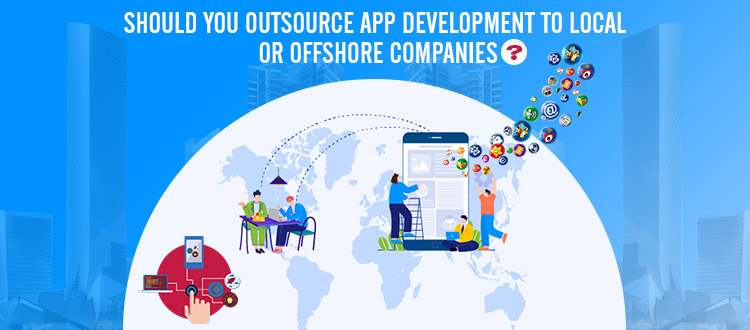
Hiring an off-shore software or app development company has its drawbacks.

There is no question that app development has continued to grow in popularity recently, and the demand is higher than ever. Today’s competitive market is full of business ventures jumping into the application bandwagon. This rise in mobile app adoption across industries means it is necessary for businesses to adapt to this technology to stay relevant.

Today, we will discuss the challenges and hidden costs that are often associated with offshore app development and the considerations you should keep in mind before hiring a team abroad.

Before we continue, we would like to share some vital statistics regarding app development and its impact on the modern world.

  • The app development industry is expected to become a trillion-dollar phenomenon by 2023.
  • The pandemic has created a massive demand for apps, with over 218 billion downloads in 2020.
  • Mobile users spend an average of 4 hours each day using applications.
  • At least 60% of smartphone users have used contact buttons for business inquiries within applications.

The popularity of the web and mobile app development has grown immensely in recent years, making it essential for anyone to consider investing in a mobile or web application. Having said that, you need to make sure that you are hiring the right team for this investment.

Now, let us move on to the challenges accompanying offshore app development. 

Quality issues with the final product

High-quality work is available worldwide, but the standards of what quality means can vary from one place to another as it depends on several factors. When you work with offshore developers, you may be dealing with a team that benchmarks quality based on their local standards or requirements.

The major issue here is that most discrepancies will arise due to differences in expectations between the parties and the process of fine-tuning the final product for increasing its quality to meet your expectations is extremely time-consuming and would lead to lost time and additional costs. Keep this in mind when you decide to hire your development partner, as this will be crucial for you to see optimal results.

Legal issues

The possibility of encountering a legal issue is a scenario that most people miss to foresee, but there are many situations where people could end up in a legal battle with the development firm. 

It is always a good idea to review the laws of the country that your offshore development team is based in. This research process alone could take precious time away from your project schedule, but it would be necessary to prepare yourself for the worst-case scenario in case you end up getting into a tussle with your offshore development team.  

Communication challenges

In most cases, people hire offshore developers who do not speak English fluently. This could be a serious issue when working on a project such as an app development because it involves several rounds of discussions and iterations and could get challenging to convey ideas, thoughts, or features. This is one of the most common reasons why offshore development can get complicated.

This is why you need to find out just how fluent the developers are in the language you prefer. Maybe a quick chat over a video conference can be a great way to reveal this and see if communication between you and their team is seamless.

Infrastructure deficiencies

It is quite possible that an offshore team is going to be using obsolete equipment to handle your project. This could lead to many setbacks and issues that could be avoided if you can hire a team that can show you the kind of hardware and work environment they will be using while developing your project. 

One of the main issues that can delay a project is the lack of quality hardware for development and testing purposes. Therefore, it is good to ensure that you are working with a team that has updated hardware, but this could also mean a higher cost to you than expected.

Travel expenses

Some projects may be too large to be handled exclusively via video conferencing. When you are dealing with a significant investment, you will find that travel expenses will also be involved in the course. This could mean several trips to meet with the developers, and that can translate to thousands of extra dollars in expenses.

There could be situations where video conferences and online meetings would suffice. Nevertheless, most large projects would usually require face-to-face meetings to finalize and conclude the works. There could be several details and conversations that cannot be expressed or conveyed through online conferences.

Further expenses and complications with updates and upgrades

Even the most experienced development teams would have to modify their application code through several rounds of bug finding and fixing to ensure a seamless experience for users. When an app is launched, there could still be several bugs arising in the code (new updates on iOS/ Android versions, updates/ upgrades from third-party vendors, different screen resolutions etc) that would require immediate attention, and it is expected that the development team would resolve the bugs as quickly as possible and release frequent patches/ updates to ensure a seamless experience for your customers/ users.

Working with an offshore app development agency will make this process complicated than it would with a team that is more accessible. This is yet another thing to keep in mind when you consider hiring a development team located in a different country or continent.

One of the main things that people need to consider is that they will not find the same level of clarity, engagement, communication, and workflow with offshore developers as they would with a domestic mobile app development company.  Therefore, it is recommended that you take your time with this process to ensure that you can make the most out of your investment. Keep these challenges in mind when considering the right team for your project.

How Innobayt helped a lubricant manufacturer enhance its operational efficiency

Innovation through automation – Innobayt’s custom solutions helped enhance the operational efficiency of a lubricant manufacturer through interconnecting systems and IoT integration.

Operational inefficiencies stemming from manual processes and other sources were a huge challenge for a global lubricant manufacturer. Innobayt successfully leverage IoT software development and smart sensors to deliver a robust custom middleware that streamlined the production process and connected their legacy systems that worked in silos. The changes addressed most of the productivity issues in the manufacturing process by minimizing human intervention, automating the processes, and centralizing all data.

About the client

Innobayt’s client is a leading manufacturer of industrial and automotive lubricants and is well-known for its commitment to quality, safety, and sustainability. Today, the lubricant manufacturer operates in more than 130 countries and has multiple R&D centers that continuously develop innovative and efficient products for its customers. The client has been around in the market for a significant time and is the go-to lubricant choice for automotive, marine, industrial machinery, aviation, and many other industries.

Challenges faced by the client:

The client’s production process before Innobayt’s involvement was full of inconsistencies and challenges. They understood that manual and siloed processes were the main sources of inefficiencies in the system and approached Innobayt to develop an effective solution. Before discussing the changes by Innobayt, it’s relevant to take a brief look at the original operations.

The targeted production line started at the filling lines where bottles were prepared by filling them with the appropriate lubricant. After this, the prepared bottles were then sorted into cartons on a conveyor belt.  A laser printer was then used to print details such as product name, batch number and production date on a label which was then applied manually on cartons.

After the manual labelling process, the cartons passed through a quality control system that accepted or rejected them based on their weight. The accepted cartons were then placed on palettes by a robotic arm, which was wrapped for safety and picked up for subsequent storage and delivery.

The existing process was highly unsatisfactory in terms of operational efficiency and overall productivity. The client faced several challenges and most of them originated from the following 5 sources.

1 – Disconnect between system operations

The previous process consisted of multiple moving parts that operated independently. The production line contained a lot of legacy equipment, used multiple data processing systems, and had no synergy due to little or no collaboration. This lack of centralization created several problems as there were no actionable data or insights from the production setup for helping with decision-making and thereby reducing the possibility to introduce a meaningful change.

2 – Inefficiencies due to manual processes

The assembly line relied on manual intervention at several stages. Starting from the entry of records to the verification of content and the removal of rejected cartons, every step required human intervention which resulted in a lot of inefficiencies.

3 – Lack of real-time data

Decentralization of data and reliance on manual processes also affected the client’s ERP system’s ability to provide essential data when required. Inventory levels, production output, and other important parameters were scattered across multiple systems like SAP, MS Excel, emails, etc. This meant that no one at the plant had a holistic view of the operations at a given time which made their decision-making process quite tedious and less effective.

4 – Frequent production stoppages

The client also dealt with the issue of frequent production stoppages due to manual intervention. This had been significantly affecting their production efficiency and was one of the major challenges that they wanted to address. Effectively reducing these stoppages was quite difficult because of the lack of accountability and inadequate tracking. The client also had a very limited number of viable options to reduce manual intervention without compromising on other essential parameters.

5 – Little to no tracking of rejections and removals

As reiterated multiple times, most of the client’s challenges were due to inefficient and legacy systems. As the data collected from various stages of the product line were decentralized, it made it difficult to track the rejections and removal of cartons from the production line. This led to discrepancies in inventory, production records, and other essential records.

How did Innobayt help?

Innobayt started its process by developing a better understanding of the client’s pain points. Innobayt held multiple workshops and interviews with the concerned teams and the management. Once the expectations were clarified, Innobayt’s experts developed a comprehensive middleware solution designed to target production efficiency by allowing all the existing systems to work synchronously and thereby allowing them to operate at their full potential.

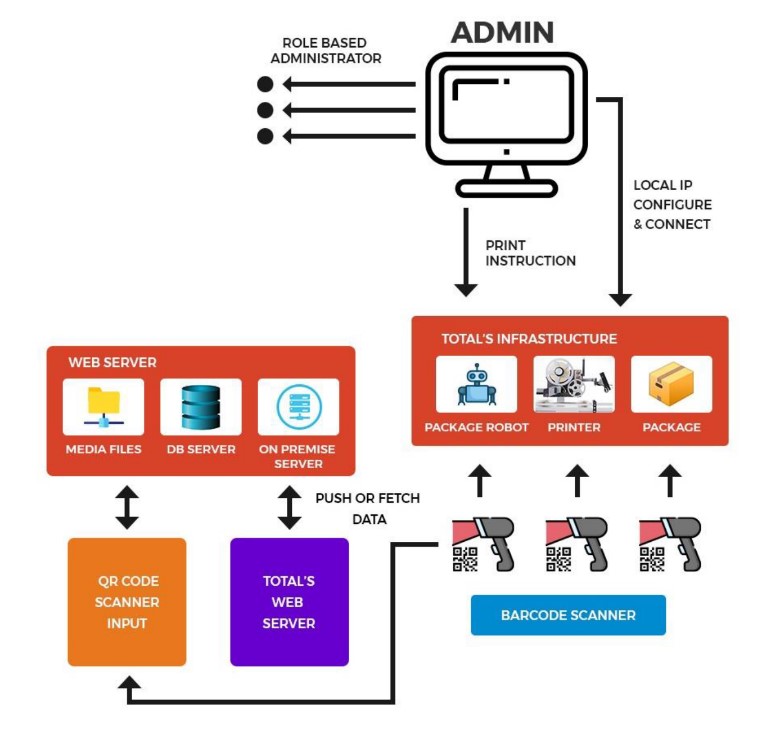
The automated system consisted of a customized middleware that connected all previously siloed systems that were in place such as roller conveyor, weight rejector, label printer, robotic arm etc. Innobayt adopted a five-pronged approach that minimized human input through automation and ensure optimal performance with consistency.

1 – Automation of the sorting process

Innobayt automated the entire sorting process from the conveyor belt to final pelleting. API and PLC based integration allowed the different equipment for printing, rejection, robotic arm and scanning to work together and eliminate the need for any manual oversight.

The offline printing model with manual data entry was replaced with an integrated system that pulled information directly from the client database (SAP) for printing. Innobayt also upgraded the carton and pallet printers, added advanced sensors (SICK photosensor), scanners (ZEBRA QR code scanner, Datalogic QR code scanner) and created an interlinked system with the capability to process and analyse data in real-time.

2 – Enhanced control and transparency over operations

One of the main problems the client faced due to data decentralization was the ineffective tracking of production output and inventories. No one knew how many cartons were rejected or why. This discrepancy in data made it difficult to introduce any improvement in the process and had the potential to result in inaccurate reporting for the client.

Innobayt used a combination of industrial photosensors and QR code scanners to eliminate this issue. Each carton and pallet were assigned a unique code that could be used to track the contents and the location of the carton. Innobayt built a unified web portal that could be accessed by all stakeholders (with role-based access control) that provided access to real-time data enabling the system to be more reliable based on which the client could make informed decisions.

3 – Remote management capabilities

With the custom-developed admin panel, not only was the client able to keep an eye on all essential parameters and production processes but they could also start, stop and maintain control over the operations by accessing the middleware through the web.

4 – Integration of legacy equipment with IoT based middleware

Any automation system remains incomplete if the legacy systems are unable to interact with the new IoT infrastructure properly. Innobayt improved the weight rejector system by using a PLC to connect its middleware with the legacy setup. This allowed the client to track the rejected cartons and sort them out separately without interrupting operations.

5 – Uninterrupted production through proactive and reactive maintenance support

Innobayt’s services did not just end upon the completion of the development and installation of the customized solution. A proactive and reactive maintenance plan was also developed to ensure the consistency and reliability of the delivered solution.

Summary: Innobayt’s innovative approach successfully revamped the client’s production operations

The client approached Innobayt with an inefficient system unable to perform to its full potential. Different systems worked in silos and required consistent human intervention to operate. Innobayt’s middleware bridged the gap between the client’s hardware and operation systems to fully automate the production process and synergize its output for enhanced productivity and efficiency.