Service-based Project Management

The cost of mobile app development services can vary greatly between countries. Countries such as India, Bangladesh, Pakistan, and the Philippines have among the lowest development costs, while the United States and the United Kingdom have the highest. The reason for this is simple – the cost of human resources in each country.

Although development costs in countries such as India, Bangladesh, and Pakistan may appear to be very lucrative for founders at first, they can pose a number of challenges in the future. In this blog, we will discuss briefly the challenges and risks that you may face when working with a low-cost offshore development company, as well as ways to mitigate those risks.

Because of the increased global penetration of the internet and smartphones, the mobile application development industry has grown rapidly in recent years. Today, approximately 6.648 billion people worldwide use smartphones, accounting for 83.72% of the total population. Countries such as India, Bangladesh, the Philippines, and Pakistan have responded to this rising demand by providing more affordable and cost-effective mobile app development services. There are approximately 32,000 IT companies in India, 4,500 in Bangladesh, and 2,350 in Pakistan. These figures are rapidly increasing due to rising demand, but companies and founders around the world are facing several challenges:

1. Price variations: It is almost certain that if you go with a low-cost vendor for your mobile app development services, the final costs will be much higher than the initially agreed-upon prices. One of the primary causes of this increase is the lack of a clear Scope of Work (SoW) document that lists each and every feature that must be built into the application. Low-cost vendors typically keep the SoW very vague because most founders are non-technical, allowing them to cash in once the project is halfway completed, leaving you with no option to question or change the vendor. Most founders have also noticed that the cost of variation quoted by cheaper vendors is significantly higher than the initial rates offered to hook you in at the start.

2. Low code quality: Hiring newbie/inexperienced software developers is the main strategy that low-cost vendors use to keep operational costs low. Less experienced software developers fresh out of university are very cheap, which means they are most likely learning to code on your project. This implies that the code quality is most likely very low, which may result in a higher number of bugs and issues once the project is launched. Most founders prefer to hand over the code after development so that the project can be maintained in-house. A low code quality would make managing the project extremely difficult for your in-house team. You would have to devote a significant amount of time and effort to improve the code’s quality, which would add to the project’s costs.

3. Project delivery delays: Having a vague SoW combined with inexperienced developers working on your project can only result in one thing – project delivery delays!!!

It is also important to consider macrotrends in these low-cost developing countries. Opportunities for software developers abound due to the low cost of hiring resources and the high demand for software development. This leads to a very high employee churn rate, in which employees leave their company after gaining some experience to join other firms that offer a slightly better package. Employee turnover in the Indian software industry typically ranges between 15 and 30%, with employees leaving for short periods of time. This is an important consideration because high employee attrition rates may result in multiple developers working on the same project, resulting in a lot of wasted time in knowledge transfer and, ultimately, extended project timelines.

4. Communication gaps: The majority of countries with a cost advantage due to lower human capital are not native English-speaking countries. The issue here is a lack of effective communication between yourself and the vendor, which may result in increased costs, a longer project timeline, and, most importantly, wasted time and effort.

5. Poor testing: Several founders have reported that the quality of mobile apps delivered by low-cost mobile app development vendors is poor, as they contain numerous bugs and inconsistencies that are only discovered after the app has been delivered. To cut costs, most low-cost mobile app development vendors invest very little in test engineers. In order to control costs, they assign additional responsibility to their developers to test the apps. This has a significant impact on project quality because developers do not have enough time to thoroughly test their code due to project deadlines. As a result, you will receive a very poor app and will have to spend your time testing the apps or invest in resources to have the apps tested to ensure the quality of your project.

6. Code handover risks: Most cheap mobile app development companies are hesitant to transfer the final code and credentials with you after project completion (although they might have committed to do so prior to project award). This is to ensure that you are not looking for other vendors to take over the project or develop it in-house for all future features and versions. They would not refuse to transfer the code to you, but they would provide very little to no assistance in understanding their work. Lack of proper documentation exacerbates the problem by making it difficult for a new team to learn the project, making the code handover process even more tedious.

Another factor to consider is the payment terms of offshore vendors, as they typically demand full payment prior to code handover, giving you less bargaining power when considering hiring them.

Another challenge with code handover is the code itself, as you would need to have relevant resources (iOS, Android, Backend, and Front-end developers) on hand to check and ensure that the most recent work is committed or handed over to you.

7. Inadequate after-sales support: It is expected that you will receive timely feedback and resolution to your questions or app fixes while the project is in development and within the warranty period. Most low-cost vendors provide very little aftersales support because it is an additional cost that they prefer to avoid. If bugs or issues are not addressed quickly, your customers may have a negative user experience. Most low-cost vendors are hesitant to offer long-term maintenance contracts because it is more profitable for them to devote their resources to new projects. This may result in your project being left hanging after launch, which is an important factor to consider when selecting your software development partner.

8. Poor business ethics: It is important to note that low-cost mobile app development vendors are likely to have poor business ethics. This could lead to a series of unpleasant encounters throughout the project’s development life cycle. This is also important to consider when choosing a vendor because you will be revealing your business idea to them, which poses a risk post-development because they may use the developed code for other projects or customers.

9. Lack of Cloud Competence: Because cloud architects are expensive resources, cheap mobile app development vendors are unlikely to have one at their disposal. Most projects require cloud expertise because it determines the scalability and performance of the mobile application. Furthermore, the cloud architect is responsible for configuring the cloud’s security features to ensure that the apps and backend are secure from hackers.


Why is Dubai the right place for your Tech company!

We live in an age of information and technology, with the number of IT companies in developed and developing countries increasing by the day. And if you’re an entrepreneur with a business idea who wants to start a company, look no further. Dubai often referred to as the “city of the future,” as well as a well-known centre for industry research and development, should be at the top of your list.

Dubai offers exciting opportunities and a favourable business climate. Dubai’s pro-business attitude and support for businesses of all sizes have resulted in a robust, vibrant economy. Not only does the city have a thriving community of start-up accelerators and regulatory sandbox schemes for the development and testing of new tech business models, but it is also ranked first in global foreign direct investment and major sections in emerging technological sectors.

As the Middle East’s technologically-based start-up scene grows, the UAE’s commitment to becoming a global leader in technological advancements has made Dubai home to some of the region’s hottest enterprises. 29 of the 100 start-ups shaping the Fourth Industrial Revolution are based in the UAE, with nearly half of them based in Dubai! Not to mention that foreign nationals benefit from 100 percent ownership, tax breaks, and customs duty exemptions, to name a few important factors when compared to other countries.

To elaborate on why Dubai is an appealing start-up hub for entrepreneurs from all over the world,

– It is simpler to start a business.

– Relaxed Foreign Ownership and Visa Requirements

– Technology and Capital Investment

– A Constantly Expanding Economy

– Pioneer in adopting cutting-edge trends and technologies

Furthermore, Dubai is a forerunner in adopting the latest trends and technologies while developing an enabling ecosystem that enables businesses across sectors to innovate with long-term strategies in AI (Artificial Intelligence), Blockchain, Metaverse, and IoT. (Internet of Things). The government is working hard to make Dubai a smart, intelligent, responsive, and personalized city of the future!

A summary of some of the most recent technologies adopted by the UAE.

Blockchain

Blockchain is a method of storing data that makes it difficult or impossible to change, hack, or manipulate. It is a digital log of transactions that is duplicated and distributed across the entire network of computer systems that comprise the blockchain. Each block on the chain contains several transactions, and whenever a new transaction occurs on the blockchain, a record of that transaction is added to each participant’s ledger. DLT (Distributed Ledger Technology) is a decentralized database that is managed by multiple people.

Why so much hype around the blockchain?

There have been numerous attempts to create digital money in the past, none of which have been successful. The main issue is one of trust; if someone creates a new currency, how can they be trusted knowing full well that they can give themselves some amount and/or steal someone else’s money for themselves? This problem was solved by employing a type of database known as ‘Blockchain.’

Most normal databases, such as SQL Database, have someone in charge who can change the entries; however, Blockchain is unique in that no one is in charge; it is run by the people who use it!

According to H.H. Sheikh Mohammed bin Rashid Al Maktoum, “Dubai will be the first city fully powered by Blockchain under the Dubai Blockchain Strategy, which is the result of a collaboration between the Digital Dubai Office and the Dubai Future Foundation to constantly explore and evaluate the latest technological innovations that demonstrate an opportunity to deliver more seamless, safe, efficient, and impactful city experiences.”

AI (Artificial intelligence)

A branch of computer science is concerned with developing intelligent machines that can perform tasks that would normally require human intelligence. Simply put, artificial intelligence is the simulation of human intelligence processes by machines, particularly computer systems. As the hype surrounding, AI has grown, vendors have been scrambling to demonstrate how their products and services integrate AI. AI necessitates a foundation of specialized hardware and software for designing and training machine learning algorithms. Although no single computer language is synonymous with artificial intelligence (AI), a few stand out, including Python, R, and Java.

According to the UAE National Strategy for Artificial Intelligence 2031, there are plans to transform the UAE into a world leader in A.I. by investing in key people and industries! “We want the UAE to become the world’s most prepared country for Artificial Intelligence,” His Highness Sheikh Mohammed bin Rashid Al Maktoum said.

The UAE aims to be one of the world’s leading AI nations by 2031, creating new economic, educational, and social opportunities for citizens, governments, and businesses, and generating up to AED 335 billion in additional growth.

Metaverse

An internet iteration as a Single, Universal, and Immersive Virtual World made possible by the use of Virtual and Augmented Reality headsets! The metaverse is a three-dimensional, hyper-realistic virtual-reality arena in which users interact with one another in computer-generated environments such as stores, learning environments, and conference rooms, among other things. Social media, augmented reality, virtual reality, video games, and other cutting-edge technology are all incorporated.

Its development is linked to the advancement of virtual reality due to ever-increasing demands, having originated in the 1992 science fiction novel Snow Crash. Some of this technology’s components have already been developed and used in online video games. Popular names include World of Warcraft, Minecraft, and Fortnite, all of which have already incorporated the metaverse. Recently, in 2021, the technology behemoth Facebook renamed itself ‘Meta’ and announced its commitment to developing a metaverse!

Since 2017, following the acquisition of the VR company AltSpcaceVR, Microsoft has implemented metaverse features such as virtual avatars and virtual meetings in Microsoft Teams.

The metaverse can be accessed via general-purpose computers and smartphones, as well as augmented reality, mixed reality, and virtual reality. Current hardware development is centred on overcoming the limitations of VR headsets and sensors, as well as increasing immersion through haptic technology. Interoperability is a major concern in metaverse development, stemming from transparency and privacy concerns.

Microsoft recently adapted this for HoloLens 2 in 2019. (a pair of mixed reality glasses developed and manufactured by Microsoft)

According to a May 20th article, the Dubai Metaverse Strategy, announced earlier this month by Dubai Ruler Sheikh Mohammed bin Rashid Al Maktoum, aims to increase the metaverse sector’s contribution to the emirate’s economy to $4 billion by 2030. It also intends to increase the metaverse’s contribution to one percent of the emirate’s GDP.

IoT (Internet of Things)

The best way to define IoT is as an interconnected network of computing devices, mechanical and digital machines, items, and people with Unique Identifiers (UIDs) and the ability to transfer data without the need for any human-to-human or human-to-computer interaction.

IoT is defined as any natural or man-made object that can be assigned an IP address and transmit data over a network, such as a person with a heart monitor implant, an animal with a biochip transponder (wireless communication, monitoring, and control device that detects and responds to incoming signals), an automobile with built-in sensors alerting the driver about low tyre pressure, or any natural or man-made object that can be assigned an IP address and transmit data over a network.

Organizations across a wide range of industries are increasingly turning to IoT software development to improve operational efficiency, better understand customers in order to provide better customer service, make better decisions, and increase the value of their businesses.

The Smart Dubai Internet of Things Strategy is a comprehensive plan to secure and promote Dubai’s digital wealth while also providing efficiency and peace of mind to all city residents, visitors, business owners, and government officials through a citywide partner network. The plan began with the announcement of two major initiatives led by Smart Dubai to promote secure information sharing and exchange via the Internet of Things.

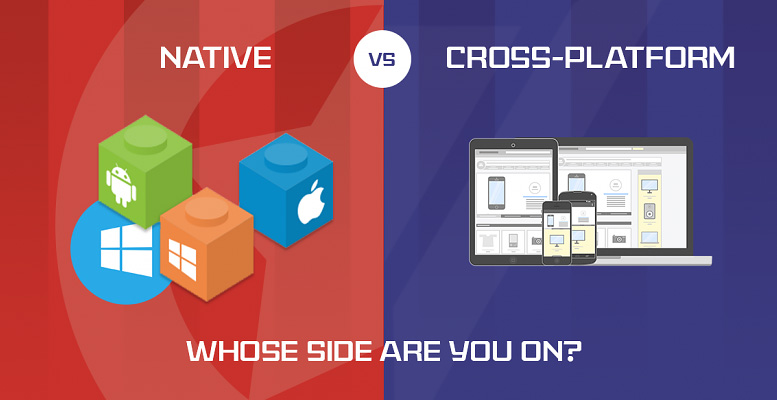
Should you go for Native or Cross-Platform Apps?

It is undeniable that mobile applications have become an integral part of our daily lives in the modern era. People are now using mobile apps for a variety of reasons, including accessing news and other information, shopping, gaming, and engaging on social media, thanks to the ever-increasing popularity of smartphone usage and mobile applications.

As a result, mobile app development companies are attempting to experiment in order to discover the best way to build a mobile app that not only looks great but also functions smoothly on various smartphones/devices.

Why is there a debate over Native vs Cross-Platform Apps?

With the ever-increasing competition between the Google Play Store and The Apple App Store, two of the world’s largest mobile application stores with a vast library of apps, determining which platform would best suit your app has become difficult.

If you want to create an app that only works on one of those two stores, you’ll need to create a completely new version for the other store. A cross-platform solution, on the other hand, aims to provide functionality in both of those stores with a single version of the app.

To put this into perspective 

  • The Google Play Store has over 2.8 million apps, while the Apple App Store has over 1.9 million.
  • The average smartphone user has 5-10 applications that they actively use.
  • Google and Apple combined for over 218 billion app downloads last year!

These figures demonstrate the importance of applications in modern times. This is the primary reason why it is critical to understand what type of app you want to create.

Let us examine the benefits and drawbacks of the two types of mobile apps – Native and Cross-Platform – and compare them based on their specific function and requirements.

Native Apps

Native app development is done with a specific platform in mind. This frequently results in a more solid outcome in terms of results and timelines. You could argue that this is the ideal solution, but it is not within everyone’s financial means.

Advantages

  • A native app is a much faster and more responsive option.
  • Push notifications that offer a more engaging experience
  • A very broad range of functionalities
  • More likely to rank higher in-store searches
  • Scalability is generally quite high.

Disadvantages

  • The cost of native apps is higher due to the need to develop more than one version of the app to be offered on more than one platform (iOS & Android).
  • The process is time-consuming because each platform must be started from scratch, and equal work in terms of development, testing, and project management must be assigned to each platform.

Cross-Platform Apps

Consider a cross-platform app as a more accessible option. This is ideal for those who do not want to invest heavily in development. Although this one-project-fits-all solution is very practical, it does have some drawbacks.

Advantages

  • Because it is the same code that works on multiple platforms, it is significantly less expensive than native app development.
  • The development process is faster, which translates to lower costs due to shorter development timeframes.

Disadvantages

  • These apps are typically slower due to a lack of platform-specific optimization.
  • Cross-platform apps have a more difficult time gaining access to various smartphone functionalities.
  • When developing cross-platform apps, you do not have access to native UX components.

The major differences between Native and Cross-Platform Apps

  • Native applications take much longer to develop, but the end results are much superior.
  • Cross-platform programming saves time, but it comes at the expense of reliability, speed, and hardware accessibility.
  • When designing a cross-platform solution, the user experience suffers since you must consider various platforms while developing it.

The success of your mobile app is not solely dependent on which of the two platforms (native/cross-platform) you choose. Airbnb (cross-platform), Bloomberg App (cross-platform), Uber (cross-platform), WhatsApp (Native), Facebook (Native), and Spotify (Native) are just a few examples of companies that choose one of the two.

It’s vital to remember that, unlike cross-platform apps, a native app can be used on several platforms. However, the app creation process for each platform is separate.

Cross-platform apps use a single development process to ensure compatibility across multiple platforms.

Final thoughts

At the end of the day, deciding whether to go native or cross-platform involves a lot of thought. The best mobile app development services can make a significant impact in this process.

When looking for a reputable mobile app development business, keep this in mind. The outcomes you obtain regardless of your decision about the development team’s experience. achieve platform compatibility across several platforms

Consider These Factors When Creating Your Company’s Website or Mobile Apps

From functionality and appearance to navigation and coding integrity, there is a lot that goes into creating an appealing, user-friendly website. It also does not stop there. Web developers and designers must work together to create websites that are found by search engines, attract customers, and encourage conversions. The race to create the next popular app is fierce, and companies that haven’t invested in one feel as if they’re missing out on a piece of the digital revolution. The suggestions below will guide you through the process of creating a one-of-a-kind user experience.

Tips to Remember When Creating a Website

When you begin the process of designing a website, you will need a checklist of necessary features. The following is a list of the most important things you should include on your website.

Domain Name

Finding the right name for your company is critical because a domain name that incorporates SEO, easy spelling, and brand identification is more likely to be found in search engine results. Excellent domain names (for example, Sellanycar.com and Propertyfinder. ae) convey a lot of information while saying very little!

UI/UX

The User Interface and User Experience are primarily determined by two factors: the website’s functional elements and an appealing design. You will not be able to wow your users unless you have a strong back-end, and without a clean design, your users will have difficulty navigating your website.

Features and Functionalities

The features of the website should be defined in accordance with the audience that you are attempting to reach. The features on your website should be viewed through the eyes of a user. It is necessary to identify the required functionalities based on the needs of the audience, geo-location, and business industry, as the absence of any functionality will prompt the user to leave the website and seek alternatives.

Optimized Loading Time

The speed with which your website loads is more important than you might think. Visitors typically leave a website if the loading time exceeds five seconds. Customers get the information they want, when they want it, thanks to fast loading times. Evaluate your website’s loading time on a regular basis to increase customer retention and provide a positive user experience.

Blogs

Customers rely on on-site blogs to stay up to date on the latest products, corporate events, and industry news. The consistency of your blog posts has a significant impact on the number of visitors who land on your website.

Search Engine Optimization (SEO) Friendliness

While content from blogs or articles is important for SEO, so is overall website content. This means that all sections of the website must contain SEO-driven content that targets relevant keywords.

Mobile responsiveness

Today, a large number of users browse websites from their mobile devices, making responsive design mandatory. Having a website that is not mobile responsive may be detrimental to your business.

Testimonials

Your prospective customers will want to know how satisfied they were with your services in the past. It is critical to include customer testimonials in order to build trust with your buyers.

Conversion Points and Strategy within your Website

You should make sure that your websites include pages dedicated to converting visitors into potential clients. This is commonly accomplished by developing a landing page that directs visitors to a sales page or by incorporating a WhatsApp/Live chat function into your website. The process of funnelling visitors and converting prospects into consumers requires some thought and must be carefully strategized based on your company’s goals.

Tips to Remember When Developing Mobile Apps

When deciding to develop a mobile app for your company, there are various factors to consider. Before you begin, make a list of some of the most important things to consider.

Native or Cross-Platform

The sort of platform required will be determined by the functionality and features to be included in the platform. Cross-platform apps have a lower budget and schedule than native apps, but you may be constrained in terms of capabilities in a cross-platform app compared to a native app.

Check your competitors

Understanding who your competitors are and what they are currently offering in terms of solutions on the market is critical. This will enable you to make the greatest selection in terms of mobile app features, allowing you to stand out in terms of USPs in the market (Unique Selling Points).

UI/UX

You must ensure that the User Experience and User Interface of your mobile app are optimized, just as you must when creating a website. If an app’s UI and UX are well-designed, users are more likely to use it and promote it to others, ensuring a positive customer experience.

Features and Functionalities

To get your app idea off the ground, you may need a lot of features and functionalities. The must-have features and functionality for your mobile app are determined by your specialization, the app’s purpose, the consumer segment you’re targeting, and a variety of other factors.

Monetizing Model

You must determine if your app will be charged or free to your users. You should also figure out if in-app purchases will be available. This is critical because, depending on your niche, each of those models will have advantages and downsides. You might use a demographic result to assist you to decide on these lines.

Registration in the Apple and Google shops takes a long time

It takes a long time to register your app on the Apple or Google stores. To avoid a bottleneck immediately before your planned launch date, you should prepare to create your apple and play store accounts far ahead of time.

Software Development Vendor/Partner Delivery Schedules

Due to a variety of reasons, the time it takes for the development team to produce your app will be critical. Costs, quality, time to market, and unique business plans will all be important considerations.

Final Thoughts

You want a service that is both economical and efficient when building a website or a mobile app. This is why it’s crucial to get a developer and designer who has a lot of expertise and understands the value of affordable prices and meeting the project’s deadline.

Take your time and make sure that the project is going on the appropriate path. Making solid judgments about the people you hire will be the most significant part of this procedure in the end.

While our goal is to provide information about beginning a business and the complexities associated with developing a suitable website and/or mobile app, please read our other blogs to learn more about the other aspects of this process.

The Benefits of Selecting the Right Software Development Company

After thoroughly discussing the concept of becoming the next big tech unicorn, analyzing the industry, validating ideas, transforming digitally, documentation and its importance, and the difference between hiring your own resources or opting for an offshore company, let us now turn our attention to the process of selecting the right software development company for your business. While it may not be as simple, it is critical that you take your time and make this decision!

Why is it critical to select the right software solutions company?

Beginning a new software project for your company can be both exciting and intimidating. Choosing a software company is a difficult process. It’s easy to become overwhelmed by the number of software development partners available, and it’s difficult to know who to put your trust in to get the job done.

It is critical to find the right software partner for your needs, someone with a proven track record, appropriate technological expertise, and a belief in solid partnerships. 

Advantages of Choosing the Best Software Company

We cannot emphasize enough how important it is to choose a software development company that has the skills, expertise, and experience to understand your idea, differentiate the good and bad aspects, suggest improvements, and commit to a completion time frame.

These companies typically work as an extension of your own, understanding your business needs, utilizing cutting-edge technology to increase profitability, combining technical excellence with excellent customer service and value for money, creatively collaborating to achieve a common goal, and ensuring the delivery of high-quality solutions.

A good software solutions provider will always check the boxes below. –

Customer Centricity

When you hire an experienced mobile app development company, you will find that they will devote time to your project. To achieve the best results, a company should be able to focus solely on your project.

The most important benefit of customer-centricity is that it will result in a more productive process. This will allow you to significantly reduce your expenses. Don’t forget this, and you’ll be able to get the best results when developing a mobile app for your company.

Understanding the scope and objective

Often, software projects fail due to a lack of clarity in the original scope, which makes communicating project requirements difficult. Ideally, a software partner will assist you in developing your project scope and scheduling follow-up meetings to address any questions from their team about your project. The best software partners will ask you several questions about your project idea in order to provide you with the best technical solution that will help you stand out in the market.

Cost Reduction

The cost of your project varies according to its scope, timeline, and requirements. The truth is that working with software developers can help your business save money and time in a variety of ways. For companies that do not want to work with a software development firm, there are numerous costs associated with the development process.

However, partnering with a software company proves to be a more cost-effective solution and ultimately more rewarding for your company due to the expertise, experience, skillsets, dedicated full-time specialists, and reasonable hourly development costs.

Technical Expertise

Finding skilled employees capable of meeting your needs and expectations is one of the most difficult challenges a company faces. Software development necessitates a wide range of constantly evolving complex skills, an innovative mindset, and out-of-the-box thinking. Not only that, but you’ll also need experts in solution-finding to help you capitalize on market opportunities.

You can ensure that your software development projects are developed using the most efficient workflows and cutting-edge software tools by partnering with an experienced software company. This assists your company in discovering novel ways in which new technologies can aid in the achievement of business objectives.

Timeline

We are all hoping for a smooth development process and quick project implementation. Unfortunately, a lack of talent and specialized skills, as well as other constraints, puts the project at risk in a variety of ways. This is where assembling a team of technical experts comes in handy, as they can help you avoid common issues that can cause a project to take longer to complete and, ultimately, cost more money!

A specialized software solutions company is always committed to your project because they provide you with a well-prepared and flexible team that is ready to adapt to changing business needs.

Marketing Reach

Great mobile app development companies will also provide you with the best promotional services for your mobile app. This is critical for the success of your business idea, and it can be challenging to handle on your own. It is critical to remember that a great application is only as good as its marketing.

A team with extensive experience will also assist you in investing in the most dependable marketing strategies. This is a critical step in the process because it allows you to improve your results. Marketing an app is just as important as developing it.

Eliminate Communication Gaps

One of the most significant advantages of working with an experienced software company is the ability to effectively communicate progress. They typically share weekly project updates, request necessary information, notify you of any glitches (if any), provide delivery and milestone checklists, and are available to answer any questions you may have about the project. They are basically open communicators!

A good software company will always try to eliminate gaps in communication about your project’s expectations, timelines, issues/bugs, and delivery, reducing the time to market for your product.

Skilled professionals

Choosing a software company is linked to the company’s skill set. Typically, an experienced software partner will have employees with the necessary talent/skill set to complete your software project smoothly.

This is very useful when you are starting your company/project because it relieves you of the burden of finding individuals with specific skills to complete your project. It not only assists you in ensuring that the developed website and/or mobile app is of the desired quality but also has a rich user experience.

Final Thoughts

At the end of the day, selecting a software firm can be difficult. As you can see from the preceding list, there is a lot to consider before making a final decision. You’ll need to prioritize the needs of your project in terms of everything from costs to communication.

Choosing the best software company is a big decision. After all, you’re not just selecting a software development partner.

You get to choose whether your company will impress customers from the moment your product is released – and beyond.

While our goal is to assist you in providing information relating to starting a company and the nuances associated with creating the relevant website and/or mobile apps, please read our other blogs to learn more about the other aspects of this process.

What exactly is a Scope of Work document, and why is it required?

A variety of documents are required when performing any type of service for a client. It is critical that you take your time and determine which steps are most critical to your project. One such item is the scope of work document.

When you begin your project journey, it is critical to have proper documentation for every aspect of your startup. This proves to be a critical component of the business at all times. It also allows you to keep track of your workflow.

When you collaborate with other people, it is easy for miscommunication or assumptions to derail the project, which is one of the main reasons why the scope of work is so important!

What is the definition of a Scope of Work document?

The Scope of Work agreement, also known as the SOW, is a document that details everything from work details to schedules, terms, and expected outcomes and is referred to by all parties involved in the project. Not only that, but it also saves you from unnecessary feature additions and extends your project’s timeline beyond what was originally promised.

Consider the scope of work document to be a road map that will lead you to the completion of any project, from website redesign to mobile app development.

What information is contained in/provided by this document?

The SoW is essentially a document that covers a work agreement between two parties known as the Client (You) and the Contractor/Vendor (Company you’re working with). SoW is essentially required to ensure that both parties’ expectations are clear and agreed upon. Having said that, there are some sections that are commonly found in this document, such as:

  • Timetables and key milestones
  •  The project’s objectives
  • Items to be delivered
  • Individual responsibilities
  • Outcomes to be expected
  • The terms and conditions
  • Payment arrangements

Why is it necessary to create this document?

When working on a project, you must ensure that everyone is on the same page and that a proper layout is created that can be analyzed and reviewed by the client.

The scope of work document is an excellent resource for a website and mobile app development company. It not only serves as the main document to follow throughout the journey, but it also assists you in avoiding some of the most common pitfalls, such as miscommunication, scope disputes, misinterpreting expectations, and the need for re-work.

The steps for developing the SoW (Scope of Work)

Now that you have a basic understanding of a scope of work and its purpose, let’s take a look at the basic outline of what it should include.

The project is introduced in this section.

Before delving into the specifics of the project, it is critical to receive an introduction to the project, as this provides all parties involved with a brief on the project goals. It also helps you understand what the development process is supposed to achieve

Overview of the company

Describe the business venture and why this project is being completed. A basic explanation of the project, the idea, business objectives, and expected outcomes are just a few examples.

Details about the user journey

Outline a high-level but straightforward explanation of the customer journey that the mobile app must provide. This would help to set the tone for the design and development team, who would then incorporate relevant designs and features into the mobile application.

Features of a mobile app/website

This section should highlight the most important features of your mobile app or website. These are not specific deliverables but must include an overview of major features that would be required in the mobile app or website, which the app development team can then break down into specific deliverables.

Theme for design

Designing a website or mobile application can also be a difficult task. It may be necessary to return to the specifics several times. The designs must be relevant to the business idea, user journey, and target audience, as well as address issues such as customer retention, ease of conversion, and so on.

This is something you should talk about with the development team. If you have a design in mind, make sure to notify the development team so that it can be taken into account.

Budget and Timetable

Finally, the project’s budget and timeline will be critical factors in this process. It is critical to define this correctly because the budget is dependent on the timeline and vice versa. Keep in mind that any changes to the SOW could affect the project’s timeline and overall cost.

How can an experienced company assist with the creation of an SoW?

Using the services of an experienced software development company with expertise in business digital transformation can have a significant impact on project quality and delivery. Your goal should be to find a company that has the right team and work ethics. Not only that, but the company’s experience helps with the creation of the scope document, which highlights the schedule, features, budget, and objectives, among other things.

Identifying and selecting an experienced software development company should be based primarily on one key process, namely communication! You’d want a partner who is reliable, proactive, and truthful. You should also consider the company’s technical stack, specialities, and capabilities.

Finally, some thoughts

When you are looking to begin any kind of software or mobile app development process, there are many things that must be defined. Keeping it brief, documenting it early on, enlisting the assistance of a technical writer, and being clear on what the project should or should not include are some key points that can make a difference.

The Scope of Work document lays the groundwork for any application development process.

Idea Validation & Funding your app

Website and mobile app development are more competitive than it has ever been. Regardless of how cool your mobile app logo or website is, you are unlikely to succeed if you do not validate your business idea before launching a startup/company. Those looking for dependable solutions require more options than ever before.

According to statistics, 42% of startups fail due to a lack of market demand for their products, apps, or services.

It’s simple to become engrossed in your thoughts. Most entrepreneurs who fail to validate their ideas, on the other hand, see their startup dreams crumble. In order to invest in optimal strategies, you must be more precise than ever. Validating any idea before investing in its implementation results in an optimal strategy. This is essential before hiring any app development company.

What is Idea Validation?

Simply put, validation is the process of testing ideas to see if they are viable. Businesses can avoid wasting time and money on ideas that may or may not be profitable by taking this approach. However, having your ideas validated saves you a lot of pain after you launch your app.

This is one of the reasons why idea validation is such an important step in the development of a mobile app. This is to ensure that you have enough confidence in the success of your mobile app investment.

Pokémon Go is an excellent example of a well-validated idea prior to launch. At the height of its popularity, over 150 million people were playing Pokémon Go at the same time, with over one billion downloads. Uber, Candy Crush, and Angry Birds are just a few of the popular apps that have seen similar results after going through the idea validation process.

How to validate your ideas

Everyone wants their ideas to be loved, but only a small percentage of those ideas are worthy of implementation. To determine whether an idea has a chance of succeeding, it must be validated. As a result, several factors must be considered in order to validate ideas. The following are some of the most important and well-practised steps to achieving the best results.

1) Conducting market research

For many different reasons, this is the heart of the entire idea validation process, and it is important to remember that marketing research is detailed as a process. It is not only necessary to collect data on the target demographics, but also on customer demands and how they seek information to influence their decisions. It also entails researching competitor information in order to achieve the desired results.

2) Preparing proto personas

Proto personas serve as a starting point for developing the best target audience for a particular product or service. This is a brainstorming session to determine who will use the product(s) or service(s) you are offering. The question “What needs does our target audience have?” guides the development of proto personas.

3) Creating a Customer Journey Map (CJM)

The Customer Journey Map illustrates the various types of relationships that people can have with brands. This analytical method allows a company to gain a better understanding of how a potential customer will behave and interact with its products and services. This information can assist business owners in improving their approach and achieving a better outcome.

4) Conducting user interviews

User interviews can also provide a wealth of information by providing a great level of insightful information. Knowing what questions to ask will be extremely important in this process, and it will make them far more reliable. With all of the analytics tools available, the best way to learn what users want is to talk to them directly.

5) Creating and testing paper or digital prototypes

You can create a digital or paper prototype (Minimal Viable Product – MVP) to get a better idea of how the project should look once completed. They both have advantages and disadvantages, so it all depends on the project’s scope, timeframe, and structure. Prototypes allow you to test the flow of a design and get a better idea of how an app will look before it is finished.

6) Using the Design Sprint

This procedure should be followed in order to reduce the overall risks associated with the deployment of a new product. It is a very useful strategy that many businesses use. Design sprints have been especially useful in overcoming major challenges, whether when developing new products or improving existing ones. It is not always possible, but it is a good idea to have the option.

7) Identify and analyze existing apps

Identifying and analyzing existing apps has always been a useful and efficient strategy for validating ideas. This provides a trustworthy and insightful viewpoint that will assist you in developing a superior application.

Funding for your application

Many people decide to seek funding for their application in order to see their project through to completion. This strategy is frequently accompanied by additional responsibilities. Not only that, but investors may complicate the process by expecting some sort of involvement. You could select one of the funding options listed below:

1) Self-funding – Invest with your co-founders

Who better to look for funding than yourself, if at all possible? It is sometimes preferable to fund your app yourself, along with all other parties involved in the project. This is unquestionably a riskier option, but the benefit is that you do not have to deal with any third parties.

2) Crowdfunding campaign setup

Over the years, the process of requesting crowdfunding for mobile app development has grown in popularity. The fact that business owners obtain funding in this manner is based on the promise of a dependable outcome and appealing benefits for all supporters.

3) Angel Investors and Partners

Consider the millionaire who funds the excavation sites for the palaeontologists in the film Jurassic Park. That is exactly what an angel investor is! A wealthy individual who believes your project is worthwhile and is willing to take the risk.

4) Business Loans 

Obtaining a business loan may be the best option for funding a project. There are numerous types of business loans to consider for funding, each with advantages and disadvantages.

Importance of hiring an experienced mobile app development company

The idea validation process is critical for any company that wants to get the most out of its investment. This is why it is critical to find a website and/or mobile app development company that can assist you in giving shape to this process in order for the project to move forward.

Final thoughts

You can begin this process and ensure the success of your website and/or mobile app development idea now that you have a better understanding of the idea validation strategies. This is one of the most useful strategies, and it is worthwhile to devote time to implementing and analyzing the collected data.

How Innobayt helped a lubricant manufacturer enhance its operational efficiency

Innovation through automation – Innobayt’s custom solutions helped enhance the operational efficiency of a lubricant manufacturer through interconnecting systems and IoT integration.

Operational inefficiencies stemming from manual processes and other sources were a huge challenge for a global lubricant manufacturer. Innobayt successfully leverage IoT software development and smart sensors to deliver a robust custom middleware that streamlined the production process and connected their legacy systems that worked in silos. The changes addressed most of the productivity issues in the manufacturing process by minimizing human intervention, automating the processes, and centralizing all data.

About the client

Innobayt’s client is a leading manufacturer of industrial and automotive lubricants and is well-known for its commitment to quality, safety, and sustainability. Today, the lubricant manufacturer operates in more than 130 countries and has multiple R&D centers that continuously develop innovative and efficient products for its customers. The client has been around in the market for a significant time and is the go-to lubricant choice for automotive, marine, industrial machinery, aviation, and many other industries.

Challenges faced by the client:

The client’s production process before Innobayt’s involvement was full of inconsistencies and challenges. They understood that manual and siloed processes were the main sources of inefficiencies in the system and approached Innobayt to develop an effective solution. Before discussing the changes by Innobayt, it’s relevant to take a brief look at the original operations.

The targeted production line started at the filling lines where bottles were prepared by filling them with the appropriate lubricant. After this, the prepared bottles were then sorted into cartons on a conveyor belt.  A laser printer was then used to print details such as product name, batch number and production date on a label which was then applied manually on cartons.

After the manual labelling process, the cartons passed through a quality control system that accepted or rejected them based on their weight. The accepted cartons were then placed on palettes by a robotic arm, which was wrapped for safety and picked up for subsequent storage and delivery.

The existing process was highly unsatisfactory in terms of operational efficiency and overall productivity. The client faced several challenges and most of them originated from the following 5 sources.

1 – Disconnect between system operations

The previous process consisted of multiple moving parts that operated independently. The production line contained a lot of legacy equipment, used multiple data processing systems, and had no synergy due to little or no collaboration. This lack of centralization created several problems as there were no actionable data or insights from the production setup for helping with decision-making and thereby reducing the possibility to introduce a meaningful change.

2 – Inefficiencies due to manual processes

The assembly line relied on manual intervention at several stages. Starting from the entry of records to the verification of content and the removal of rejected cartons, every step required human intervention which resulted in a lot of inefficiencies.

3 – Lack of real-time data

Decentralization of data and reliance on manual processes also affected the client’s ERP system’s ability to provide essential data when required. Inventory levels, production output, and other important parameters were scattered across multiple systems like SAP, MS Excel, emails, etc. This meant that no one at the plant had a holistic view of the operations at a given time which made their decision-making process quite tedious and less effective.

4 – Frequent production stoppages

The client also dealt with the issue of frequent production stoppages due to manual intervention. This had been significantly affecting their production efficiency and was one of the major challenges that they wanted to address. Effectively reducing these stoppages was quite difficult because of the lack of accountability and inadequate tracking. The client also had a very limited number of viable options to reduce manual intervention without compromising on other essential parameters.

5 – Little to no tracking of rejections and removals

As reiterated multiple times, most of the client’s challenges were due to inefficient and legacy systems. As the data collected from various stages of the product line were decentralized, it made it difficult to track the rejections and removal of cartons from the production line. This led to discrepancies in inventory, production records, and other essential records.

How did Innobayt help?

Innobayt started its process by developing a better understanding of the client’s pain points. Innobayt held multiple workshops and interviews with the concerned teams and the management. Once the expectations were clarified, Innobayt’s experts developed a comprehensive middleware solution designed to target production efficiency by allowing all the existing systems to work synchronously and thereby allowing them to operate at their full potential.

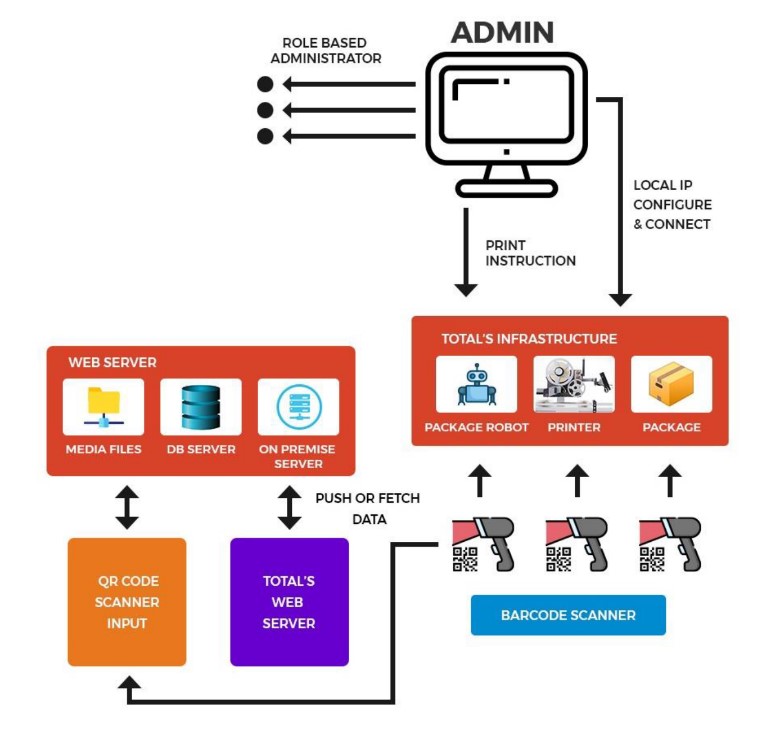
The automated system consisted of a customized middleware that connected all previously siloed systems that were in place such as roller conveyor, weight rejector, label printer, robotic arm etc. Innobayt adopted a five-pronged approach that minimized human input through automation and ensure optimal performance with consistency.

1 – Automation of the sorting process

Innobayt automated the entire sorting process from the conveyor belt to final pelleting. API and PLC based integration allowed the different equipment for printing, rejection, robotic arm and scanning to work together and eliminate the need for any manual oversight.

The offline printing model with manual data entry was replaced with an integrated system that pulled information directly from the client database (SAP) for printing. Innobayt also upgraded the carton and pallet printers, added advanced sensors (SICK photosensor), scanners (ZEBRA QR code scanner, Datalogic QR code scanner) and created an interlinked system with the capability to process and analyse data in real-time.

2 – Enhanced control and transparency over operations

One of the main problems the client faced due to data decentralization was the ineffective tracking of production output and inventories. No one knew how many cartons were rejected or why. This discrepancy in data made it difficult to introduce any improvement in the process and had the potential to result in inaccurate reporting for the client.

Innobayt used a combination of industrial photosensors and QR code scanners to eliminate this issue. Each carton and pallet were assigned a unique code that could be used to track the contents and the location of the carton. Innobayt built a unified web portal that could be accessed by all stakeholders (with role-based access control) that provided access to real-time data enabling the system to be more reliable based on which the client could make informed decisions.

3 – Remote management capabilities

With the custom-developed admin panel, not only was the client able to keep an eye on all essential parameters and production processes but they could also start, stop and maintain control over the operations by accessing the middleware through the web.

4 – Integration of legacy equipment with IoT based middleware

Any automation system remains incomplete if the legacy systems are unable to interact with the new IoT infrastructure properly. Innobayt improved the weight rejector system by using a PLC to connect its middleware with the legacy setup. This allowed the client to track the rejected cartons and sort them out separately without interrupting operations.

5 – Uninterrupted production through proactive and reactive maintenance support

Innobayt’s services did not just end upon the completion of the development and installation of the customized solution. A proactive and reactive maintenance plan was also developed to ensure the consistency and reliability of the delivered solution.

Summary: Innobayt’s innovative approach successfully revamped the client’s production operations

The client approached Innobayt with an inefficient system unable to perform to its full potential. Different systems worked in silos and required consistent human intervention to operate. Innobayt’s middleware bridged the gap between the client’s hardware and operation systems to fully automate the production process and synergize its output for enhanced productivity and efficiency.